The Current Status of Birthright Citizenship in the United States

Katja Frommer
Attorney
What Is Birthright Citizenship?
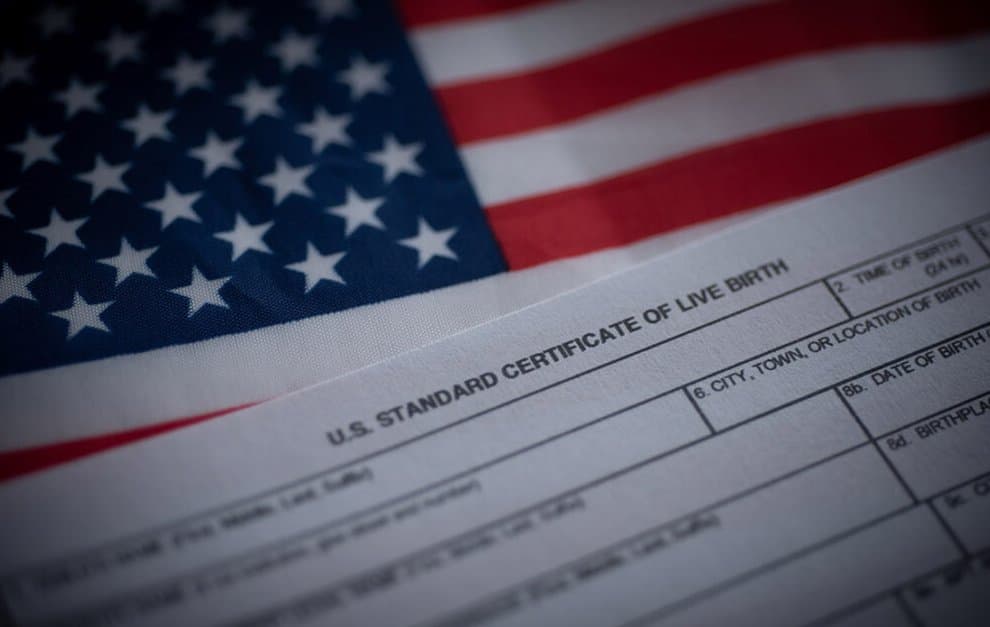
Birthright citizenship in the United States grants automatic citizenship to:
- All children born in the U.S., regardless of their parents’ immigration status (jus solis, meaning right of soil); and
- Children born abroad to at least one U.S. citizen parent (jus sanguinis or right of blood).
What Is the Legal Basis for Birthright Citizenship?
Birthright citizenship was established in 1868 by the Fourteenth Amendment of the U.S. Constitution, which states: “All persons born or naturalized in the United States, and subject to the jurisdiction thereof, are citizens of the United States and of the State wherein they reside.” This guarantees birthright citizenship to every child born within the jurisdiction of the United States. A landmark case from 1898, United States v. Wong Kim Ark, confirmed birthright citizenship for children of all immigrants and found that only the children of foreign sovereigns, diplomats, or occupying forces—all of whom are not subject to our jurisdiction while in the United States—are excluded.
President Trump’s Executive Order and the Current Dispute Over Birthright Citizenship
On January 20, 2025, President Trump issued an executive order titled “Protecting the Meaning and Value of American Citizenship.” In this executive order (EO), President Trump declared that, effective February 19, 2025, children born in the United States under the following scenarios are not considered subject to the jurisdiction of the United States and therefore will not automatically acquire citizenship upon birth in the United States:
- A child born to a mother who is unlawfully present in the U.S. and a father who is not a U.S. citizen or lawful permanent resident (LPR or Green Card holder) at the time of the child’s birth; or
- A child born to a mother who is lawfully but only temporarily present in the U.S. and a father who is not a U.S. citizen or LPR at the time of the child’s birth.
If implemented, this executive order would not only exclude from birthright citizenship the children of undocumented immigrants, but also the children of lawfully present tourists, students, or temporary workers (e.g., those here on H, O, L, E, TN visas, etc.), as well as refugees and asylum-seekers. Only the children of U.S. citizens and LPRs would become U.S. citizens upon birth in the United States.
The Current Legal Fight Over Birthright Citizenship
- January 21, 2025: One day after President Trump signed his executive order on birthright citizenship, 22 states, the District of Columbia, and two immigrant rights groups filed lawsuits in federal court to block the EO. Three federal judges swiftly issued nationwide injunctions, blocking the EO from taking effect.
- March 13: The Trump administration appealed to the U.S. Supreme Court.
- June 27: The Supreme Court held that nationwide injunctions are generally too broad, but that more widespread relief can be sought by filing class action lawsuits. The court did not address whether the EO is constitutional and ordered that, starting July 27, 2025, it could be implemented in the 28 states that had not sued. This would have led to unworkable situations where some children born after that date would be citizens in the 22 states that had sued and non-citizens in the other 28 states, and likely unable to obtain a Social Security number or passport from the federal government.
- June 27: The American Civil Liberties Union (ACLU) and others filed a class action on behalf of all children born on U.S. soil and affected by the EO.
- July 10: A federal court blocked the EO nationwide and gave the Trump administration seven days to appeal.
Where Are We Now?
The executive order is currently on hold, and birthright citizenship remains the law of the land in all 50 states, meaning that every child born in the United States is automatically a U.S. citizen, regardless of their parents’ citizenship or immigration status. The issue of the EO’s constitutionality will continue to make its way through the lower courts and eventually reach the U.S. Supreme Court, probably during its next term starting in October 2025. Most legal scholars think it unlikely that the Supreme Court would side with the Trump administration on this long-established and fundamental rule of American nationality law.
Have questions about your immigration options?
Our attorneys are here to help you navigate the complexities of U.S. immigration law.
You might also be interested in

The FY 2027 H-1B Lottery: Weighted Selection Based on Wage Level
January 19, 2026
Waking Up Canadian: How Bill C-3 Expands Citizenship by Descent
December 22, 2025

Important Update: H-1B and H-4 Visa Interview Changes in India
December 18, 2025

Modernizing Canadian Citizenship by Descent: The Implications of Bill C-3
December 1, 2025
Want to stay updated?
Subscribe to our mailing list to keep up with latest news, updates, and insights on U.S. immigration law and policy.