Summary of the Biden Administration’s H-1B Modernization Rule
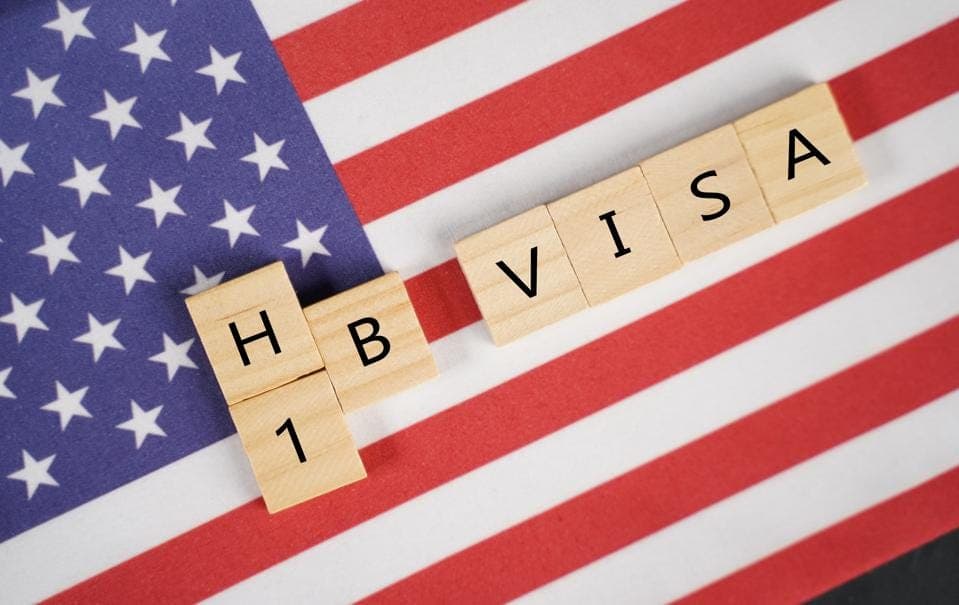
On January 17, 2025, just a few days ahead of the inauguration of President Trump, the Department of Homeland Security (DHS) will implement its new H-1B modernization rule, titled "Modernizing H-1B Requirements, Providing Flexibility in the F-1 Program, and Program Improvements Affecting Other Nonimmigrant Workers." The new rule aims to clarify H-1B requirements and improve program efficiencies, provide greater benefits and flexibilities, and further strengthen the H-1B program's integrity. It builds on recent H-1B program modernization efforts focused on the H-1B registration and selection process (aka "H-1B lottery").
Key changes under the new H-1B Rule
Updated definition of "specialty occupation"
- Under the new rule, a position may qualify as a specialty occupation even if it allows for a range of qualifying degree fields, as long as each field is "directly related" to the duties of the position. This means there must be a logical connection between the degree—or its equivalent—and the job duties.
- The rule also clarifies that a position that normally requires a bachelor's degree must not always require such a degree.
Third-party worksites
- The new rule clarifies that when an H-1B worker is staffed or contracted to a third party, the work performed by the beneficiary for the third party must be in a specialty occupation, and it will be the requirements of the third party—and not the petitioner—that determine whether the position is a specialty occupation.
H-1B eligibility for entrepreneurs and startup founders
- Beneficiaries who owns a controlling interest in the petitioning entity may qualify for H-1B status if they will mostly perform specialty occupation duties. However, the initial validity period and first extension for these beneficiary-owners will be limited to 18 months each instead of the usual three years.
Deference to prior approvals
- DHS finally codifies its on-and-off policy of deference to prior approvals involving the same parties and the same underlying facts—absent material error, material changes, or new and adverse information. This will apply to all nonimmigrant categories using Form I-129 (e.g., H, O, L-1, TN, etc.) and include requests for extensions of stay, change of status, amendments, and consular processing, ideally resulting in shorter processing times.
Elimination of the itinerary requirement
- Petitioners no longer have to provide an itinerary with the dates and locations of services or training. This will apply to all H classifications.
Changed definitions of "nonprofit research organization" and "governmental research organization" to expand cap exemptions
- Under the new rule, nonprofit entities and governmental organizations no longer must be "primarily engaged" in research to qualify for an exemption from the annual H-1B cap, as long as they conduct research as a "fundamental" activity.
- Also, H-1B workers who are not directly employed by a cap-exempt organization but spend at least half their time providing essential work supporting or advancing a fundamental purpose, mission, objective, or function of the qualifying organization may now qualify for exemption from the cap.
Strengthened cap-gap protections for F-1 students
- For F-1 students seeking to change their status to H-1B, the validity period of their F-1 status and any OPT work authorization will be automatically extended until April 1 of the relevant fiscal year while their H-1B petition is pending.
Additional measures to strengthen program integrity
The new rule defines a "United States employer" as a person, firm, corporation, contractor, or other association or organization in the United States that has the following:
- Bona fide (formerly: "non-speculative") job offer for the beneficiary to work within the U.S.;
- Legal presence in the U.S. and amenability to process of service; and
- IRS Tax ID number.
- The bona fide specialty occupation position must be available for the beneficiary as of the requested start date. A bona fide job offer may include telework, remote work, or other off-site work within the United States, as well as more flexible work schedules.
- The rule codifies the government's authority to request contracts, work orders, client letters, or similar evidence to determine if the position is bona fide (trade secrets contained in such materials may be redacted or sanitized).
- USCIS must ensure that the LCA supports and properly corresponds to the petition.
- The rule codifies the government's authority to conduct site visits and clarifies that a refusal to comply may result in a denial or revocation of the petition. Inspections may take place at the petitioner's headquarters, satellite locations, or the locations where the beneficiary works or will work, including the beneficiary's home or third-party worksites.
- The new rule also clarifies when amended or new petitions must be filed in the event of a change in a worker's place of employment, and it mitigates the impact of lengthy adjudications by allowing the petitioner to amend the initially requested dates of intended employment and provide a new LCA rather than filing a whole new H-1B petition.
What else should you know about the new H-1B Rule?
- A new, revised edition of Form I-129, Petition for a Nonimmigrant Worker will become mandatory starting January 17, 2025, and there will be no grace period for previous form versions.
- For the incoming Trump administration to repeal or amend this rule in whole or in part, a public notice and comment period would be required. In the alternative, Congress could use the Congressional Review Act (CRA) to vacate the rule by a simple majority resolution within 60 legislative days of the rule's publication in the Federal Register. In any case, employers and beneficiaries should brace for some challenges to the rule, expect some level of uncertainty, and closely work with their immigration counsel to address any changes.
- Finally, a reminder that the H-1B registration fee for the upcoming FY2026 cap selection season will be $215 (up from $10 in 2024).
Have questions about your immigration options?
Our attorneys are here to help you navigate the complexities of U.S. immigration law.
You might also be interested in

A New B-1 Category For Specialized Trainers, and Where It Gets Tricky
July 15, 2026
A new name for the firm we've been building
July 2, 2026

What 388 petitions taught us about winning O-1, EB-1, and NIW cases
June 24, 2026

District Court Vacates $100,000 H-1B Fee
June 8, 2026
Want to stay updated?
Subscribe to our mailing list to keep up with latest news, updates, and insights on U.S. immigration law and policy.